
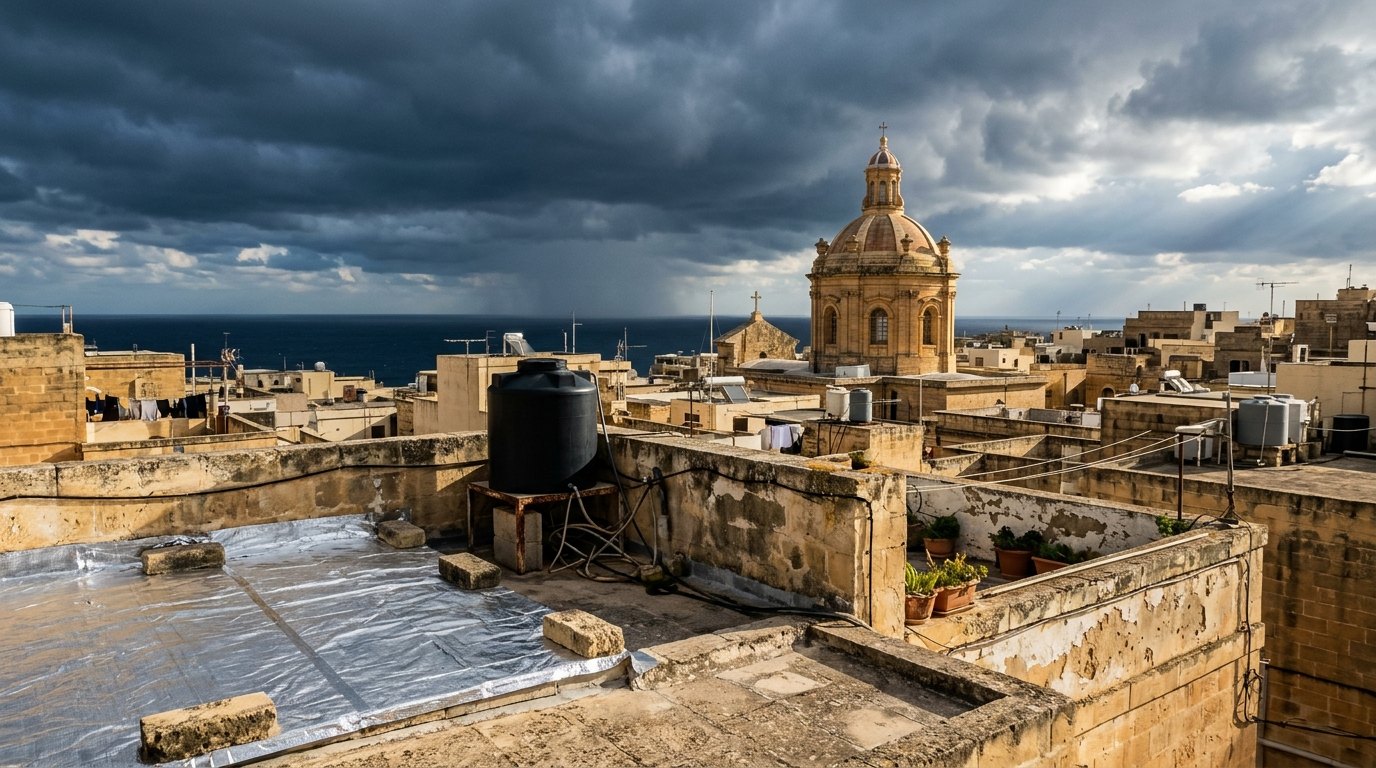
 Malta
Roof Insulation in Malta: Keep Out the Heat, Damp and Winter Chill
In Malta, October usually brings the shift from long summer heat to the first heavy autumn downpours and thunderstorms, while humidity stays high. Concrete flat roofs take the brunt of both: they soak up the sun for months and then face driving rain and damp, chilly winter nights. That makes autumn a smart time to plan roof insulation in Malta, so your home is ready for winter and for next summer’s heat.
In this guide you will learn why the roof is the weak point of most Maltese homes, how reflective insulation works, which Alumix products suit which job and how to approach the work step by step.
Why an uninsulated roof costs you money
A flat concrete roof is exposed to the sun all day. In summer it stores heat and releases it into the rooms below well into the night. In winter the same slab lets warmth escape and becomes a cold surface where moisture can condense. Typical consequences:
- High air-conditioning costs: the A/C runs for longer in summer and autumn.
- Cold, damp rooms in winter: heat escapes through the roof slab.
- Condensation and mould: humid indoor air condenses on the cold ceiling, a common problem on the islands.
- Rain damage: heavy autumn downpours expose cracks and weak points in roof membranes.
From Valletta to Gozo
Malta’s climate is mild, but every home faces the same challenges: strong sun, salty sea air, high humidity and occasional violent storms. Top-floor apartments and penthouses in dense towns feel the heat most in summer, while older houses of stone and concrete often suffer from damp in winter. A well-insulated roof helps on both fronts: the aluminium foil reflects the sun’s heat in summer and keeps warmth inside in winter.
What reflective insulation does – and what it doesn’t
Alumix reflective insulation combines pure aluminium foil with layers of air bubbles or foam. The foil reflects radiant heat, and the inner layers slow down heat conduction. For the reflection to work, the foil needs a small air gap to the next surface.
Important: reflective insulation does not replace the insulation and waterproofing required for a full roof renovation. It is an effective addition and a quick upgrade for roofs and ceilings with little or no insulation. The foil also acts as a vapour control layer; on flat roofs, ask a professional to confirm the right build-up.
Cross-section of a flat roof
One layer for summer and winter
The sun heats the roof slab. The foil above the ceiling reflects that heat back up, so the room stays cooler.
Heat from the room is reflected back down instead of escaping through the cold slab.
The right Alumix products for your roof
| Application | Recommendation | Why |
|---|---|---|
| Flat roofs and floors (under screed) | Alumix BLH-F 8mm | Made for floors, slabs and flat roofs, compression-resistant under screed, rolls of 36 m² |
| Ceilings and false ceilings | Save Cool Triplex 25mm | Six layers, reflects up to 98 % of radiant heat, tested core R-value 0.67 m²K/W |
| Metal roofs, garages and stores | Bronze FR 4mm | 99 % pure aluminium on both faces, reflects up to 98 % of radiant heat |
| Small DIY jobs | Alumix DIY Basic | Short 6, 8 or 10 m rolls that cut with household scissors |
Alumix foil products contain no glass fibre and do not absorb water, so they won’t hold damp or encourage mould.
Step by step: how to insulate your roof and ceilings
- Check the roof: repair cracks, leaks and failed waterproofing first.
- Measure up: work out the area and add about 10 % for overlaps.
- Fit the insulation: lay the rolls with an overlap of about 5 cm, or fix them above a false ceiling.
- Tape the joints: use aluminium tape for an airtight finish.
- Leave an air gap: under a ceiling, keep about 2 cm of air between the foil and the lining.
- Get the layers right: on flat roofs, the position of insulation, vapour control and waterproofing matters, so ask a professional.
You will find more detail in our guides to floor and slab installation and metal buildings.
More tips for the stormy season
- Clear roof drains: blocked outlets cause ponding and leaks in heavy rain.
- Secure items on the roof: water tanks, solar heaters and furniture should be firmly fixed.
- Ventilate daily: a few minutes with windows wide open helps reduce indoor humidity.
- Use a dehumidifier in winter: it helps prevent mould on walls and ceilings.
Frequently asked questions
Is roof insulation worth it in Malta?
Yes. The roof receives the most sun of any surface. With good insulation the home stays cooler in summer and warmer and drier in winter.
Can I fit the insulation myself?
For ceilings and small areas, yes, as the material is light and easy to cut. For flat roofs under screed, we recommend using a professional.
Does reflective insulation replace standard insulation?
No. It is an addition. For a full renovation, follow current regulations and get advice from an architect or energy adviser.
Is the material fire rated?
Alumix FR versions are treated with fire retardants and classified to the British standard BS 476. Maltese fire safety requirements apply separately and should be taken into account when planning.
Ready for the season? Find the right Alumix insulation for your roof or become an Alumix distributor in Malta: View products · Contact us · Become a distributor.
Sources: Malta Meteorological Office · Climate of Malta.
Leave a Reply