
 Ireland
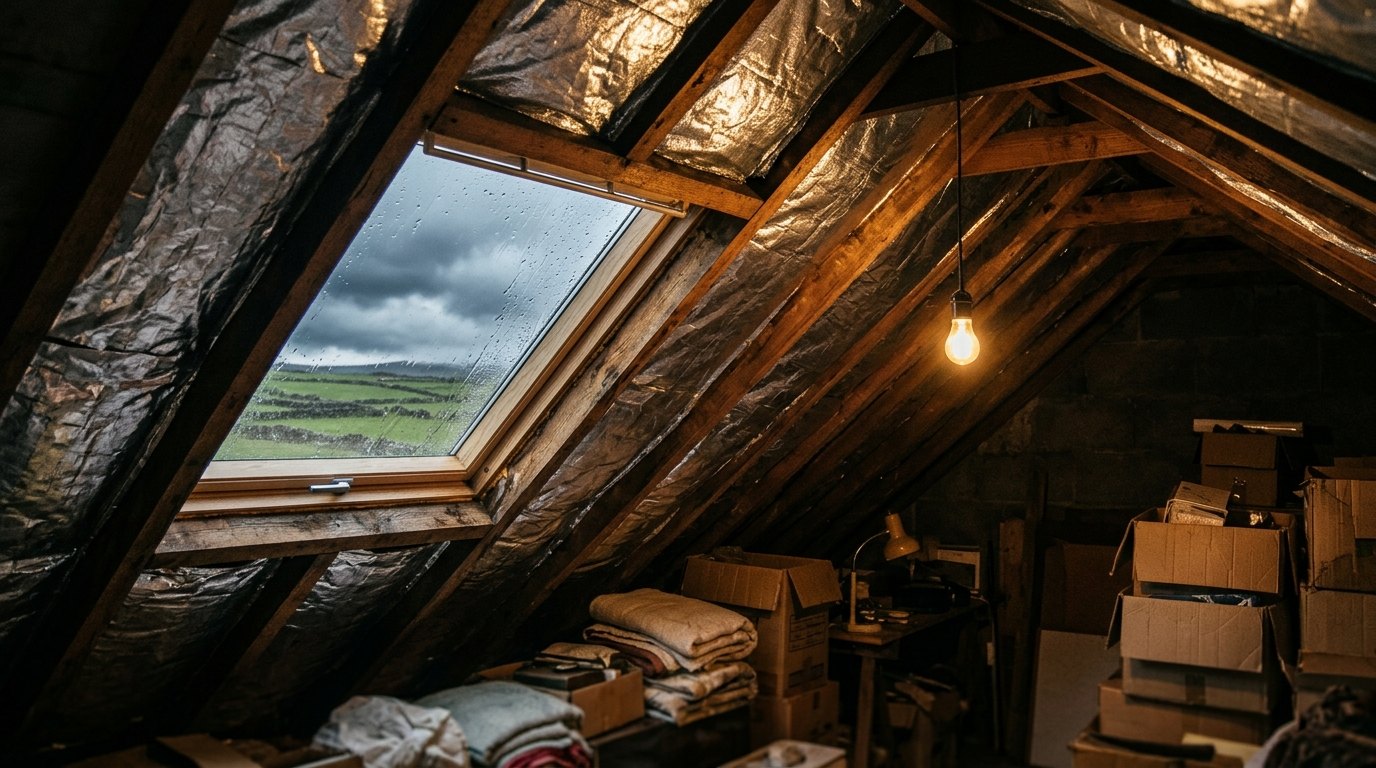
Attic Insulation in Ireland: Beat the Rain, Wind and Winter Cold
Autumn has turned wet and wild in Ireland. Met Éireann expects rainfall this week to be two to three times the average, with the heaviest totals in the southwest, very windy conditions on Thursday and temperatures up to 2 °C below normal. Monday began with frost in places, and the October Bank Holiday weekend looks unsettled too. Now is the right time to look at attic insulation in Ireland before winter sets in properly.
In this guide you will learn why the attic loses so much heat in winter, how reflective insulation works, which Alumix products suit which job and how to tackle the work step by step.
Why a poorly insulated attic costs you money
Warm air rises. If the roof or attic floor is poorly insulated, heat escapes exactly where it collects. Wind strips heat from the roof even faster, and wind-driven rain can find its way through gaps into the roof structure. Typical consequences:
- Higher heating bills: the heating runs longer to make up for the losses.
- Cold bedrooms upstairs: rooms under the roof cool down quickly at night.
- Condensation and mould: damp indoor air can condense on cold parts of the roof.
- Draughts: gaps around the attic hatch and chimney let cold air in.
From the Atlantic coast to the midlands
Ireland’s weather varies more than you might think. Along the west and southwest coasts, wind and driving rain are the biggest threats to a roof. Inland, clear nights bring frost more often, while the east is usually drier but still damp in winter. Everywhere the same rule applies: a well-insulated attic keeps heat in during winter and keeps the upstairs cooler on warm summer days, because the aluminium foil also reflects the sun’s heat.
What reflective insulation does – and what it doesn’t
Alumix reflective insulation combines pure aluminium foil with layers of air bubbles or foam. The foil reflects radiant heat back into the room, and the inner layers slow down heat conduction. For the reflection to work, the foil needs a small air gap to the next surface.
Important: reflective insulation does not replace the insulation required by building regulations during a renovation. It is an effective addition to mineral wool or other materials, and a quick upgrade for attics that are still poorly insulated. The foil also works as a vapour control layer, protecting the structure from moisture coming from the house. If you are planning a larger upgrade, check what SEAI grants may currently be available.
Cross-section of a house with an attic
Where your heat escapes through the attic
Warm air and radiant heat rise through the ceiling into the cold attic and escape through the roof.
Laid on the attic floor, the aluminium layer reflects radiant heat back into the room, while the air layers slow conduction.
The right Alumix products for your attic
| Application | Recommendation | Why |
|---|---|---|
| Unused attic (on the attic floor) | Save Cool Mega 40mm | Nine layers with five reflective foils, core R-value 1.02 m²K/W |
| Attic conversion (under the rafters) | Multi+ 10mm | Net-reinforced and tear resistant, with an IXPE foam core as a thermal break; reflects up to 98 % |
| Under slates or tiles | RADWRAP T180 REF | Water-resistant and breathable: keeps out wind-driven rain while letting moisture escape |
| Smaller DIY jobs | Alumix DIY Superior | Trade-grade material in home-sized rolls, with eyelets and cable ties |
Alumix foil products contain no glass fibre and do not absorb water, so the job is clean and won’t irritate your skin.
Step by step: how to insulate your attic
- Check the roof: fix leaks, damp and mould first.
- Measure up: work out the area of the attic floor or roof slopes and add about 10 % for overlaps.
- Fit the insulation: roll the material out on the attic floor or staple it under the rafters with an overlap of about 5 cm.
- Tape the joints: use aluminium tape for an airtight finish.
- Leave an air gap: under the rafters, use battens to create an air gap of about 2 cm to the lining.
- Vapour control on the warm side: the foil is almost vapour-tight and belongs on the room side.
- Don’t forget the hatch: insulate the attic hatch with an offcut and seal around the edges.
You will find more detail in our guides to attic insulation and fitting under the battens.
More tips for wet and windy weeks
- Clear gutters and downpipes: blocked gutters cause damp damage in heavy rain.
- Secure loose items: garden furniture and covers can be blown away in strong gusts.
- Ventilate briefly but fully: open windows wide for a few minutes rather than leaving them ajar.
- Close curtains at night: this cuts heat loss through the windows.
Frequently asked questions
Is attic insulation worth it in Ireland?
Yes. A lot of heat escapes through a poorly insulated roof. Even insulating just the attic floor makes the rooms below noticeably warmer.
Can I fit the insulation myself?
Yes. The material is light, cuts with scissors or a utility knife and fixes with a staple gun or tape.
Does reflective insulation replace standard insulation?
No. It is an addition. For a full renovation, follow current building regulations and get advice from an energy adviser.
Is the material fire rated?
Alumix FR versions are treated with fire retardants and classified to the British standard BS 476. Irish fire safety requirements apply separately and should be taken into account when planning.
Ready for winter? Find the right Alumix insulation for your attic or become an Alumix distributor in Ireland: View products · Contact us · Become a distributor.
Sources: Met Éireann · Agriland, Met Éireann warns of heavy rain and strong winds this week, 19 October 2026.
Leave a Reply